HAND MADE

Showing 61–75 of 83 results

1940’s HAUS KONIGIN EXTRA PUROS SINGLES

$30.00

Due to the individual packaging each cigar in tinfoil and the price of each, one can assume that these are Havana-cigars, made in Germany. The price on the tax stamp is given in "Rpf", which means 40 cent from 1 "Reichsmark". The "Reichsmark" existed in Germany from 1924 to 1948, so they could even be pre-war cigars.

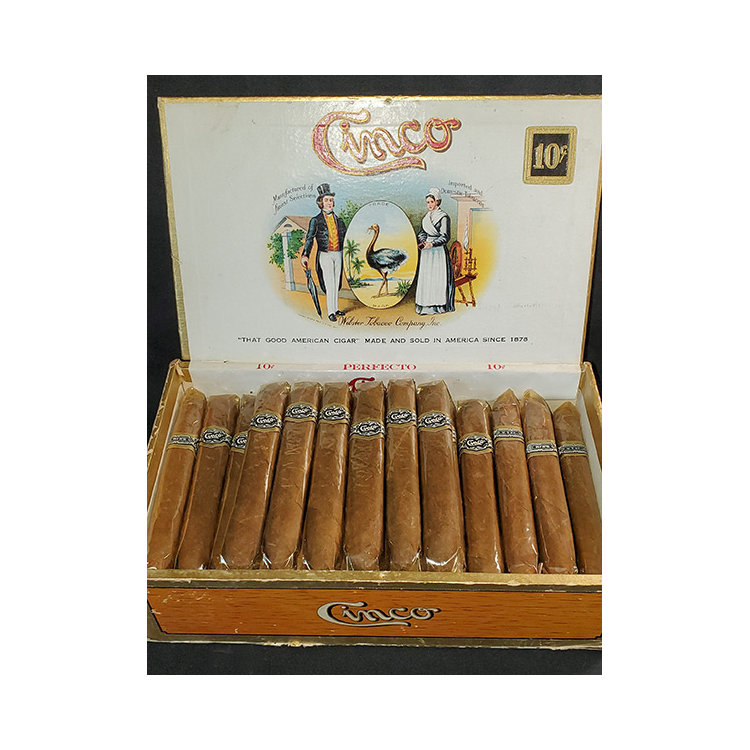
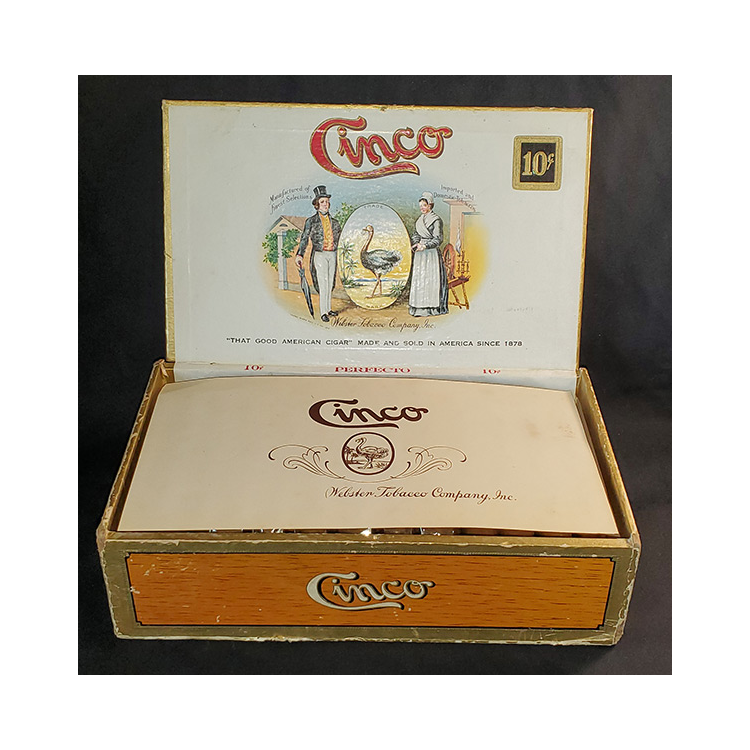
1947 WEBSTER CINCO PERFECTO CLEAR HAVANA SINGLES

$50.00

These Perfectos were made between 1945 to 1947. They are hand made with Havana long filler, a binder from Puerto Rico and a shade grown broadleaf wrapper. Dating was done by the logo style of the band and the 10 cent price. The price increased to 11 cents in 1947 as determined by dated magazine ads. These were in stores immediately following WWII,

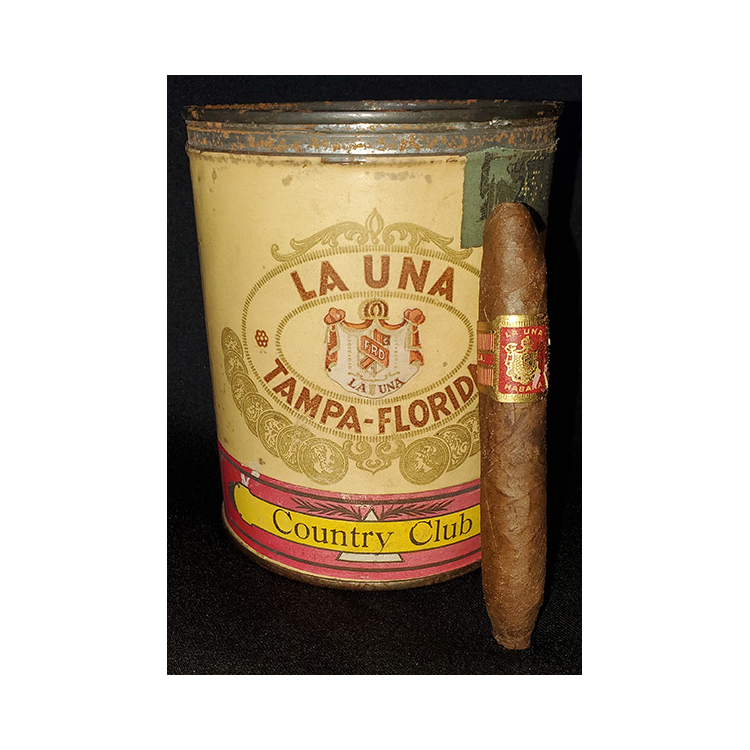
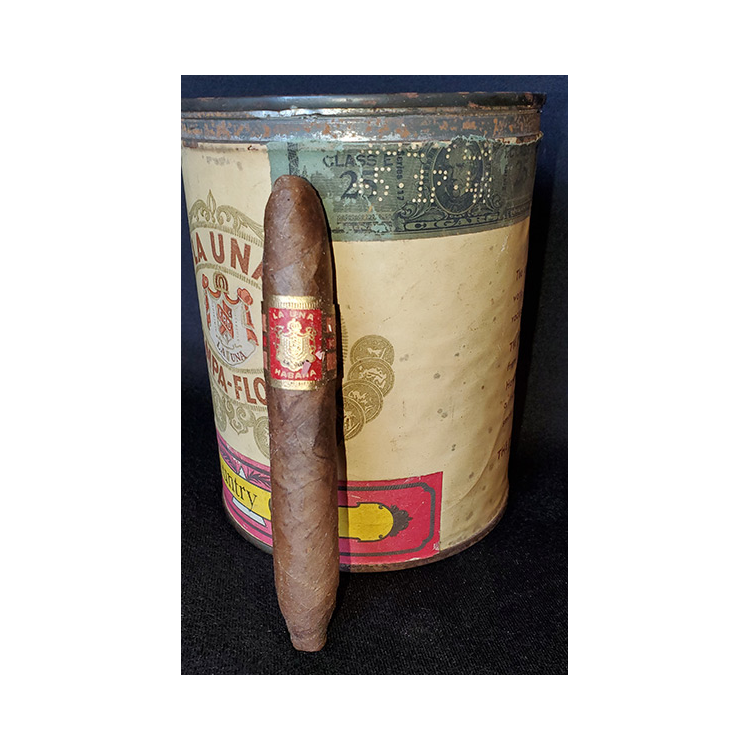
1948 LA UNA COUNTRY CLUB PERFECTO HAVANA SINGLES

$50.00

THESE CIGARS WERE HAND MADE IN TAMPA FROM IMPORTED CUBAN TOBACCO AND WERE IN A SEALED TIN UNTIL OPENED FOR INSPECTION RECENTLY. THE DATE OF RELEASE OF 5-17-48 IS SHOWN ON THE TAX STAMP (BLUE LABEL).

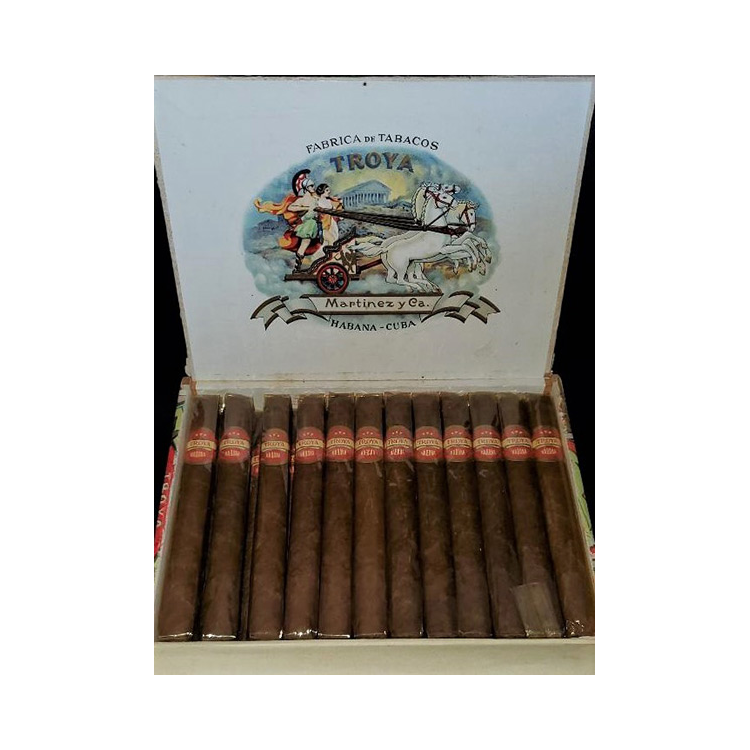
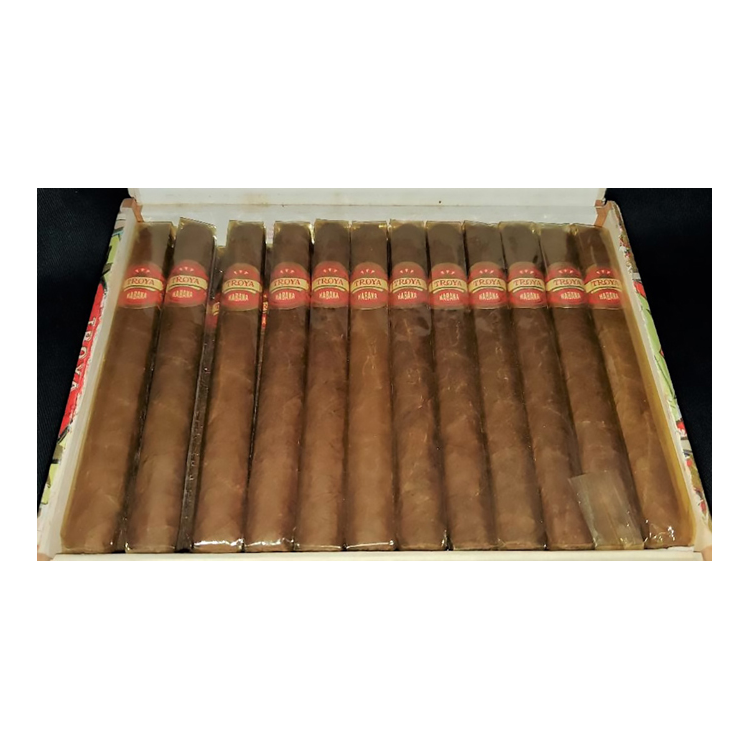
1950s TROYA UNIVERSALES HABANA SINGLES

$60.00

Troya is a brand of premium Cuban cigars that has been enjoyed by aficionados around the world for over a century. The brand was first established in 1885 by Jose Rocha, a tobacco grower and cigar maker from the Vuelta Abajo region of Cuba. Over the years, Troya has gained a reputation for producing some of the finest cigars in the world, thanks to the exceptional quality of the tobacco and the skill of their craftsmen. This box was freshly opened and is dated to the 1950s by the presence of the Cuban seal (green) which was used from 1931 to 1961. The band is a pre-1960s release according to the cubancigarwebsite. It may be older but I am being conservative.

For a good review of this cigar please visit the web link for Halfwheel below:


HALFWHEEL TROYA PRE-EMBARGO REVIEW

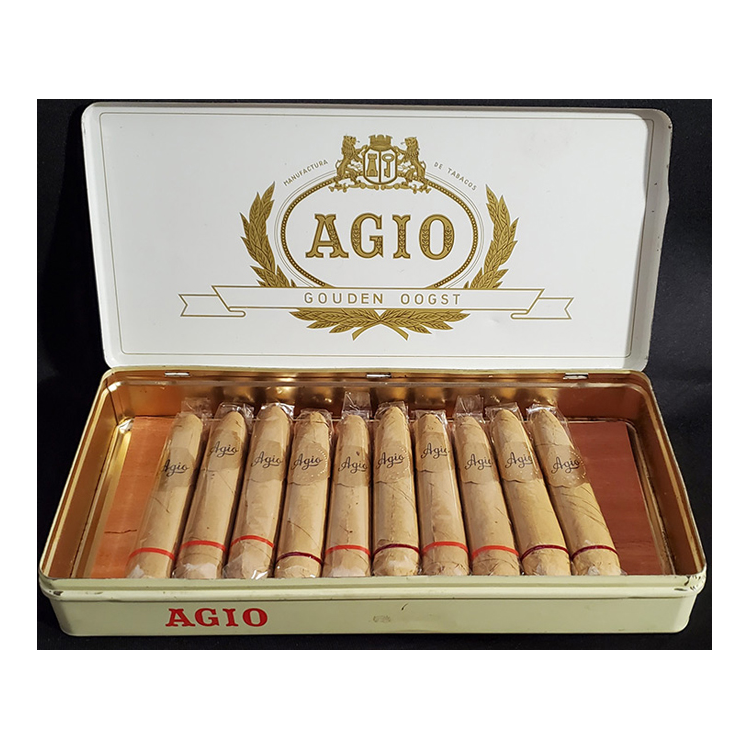
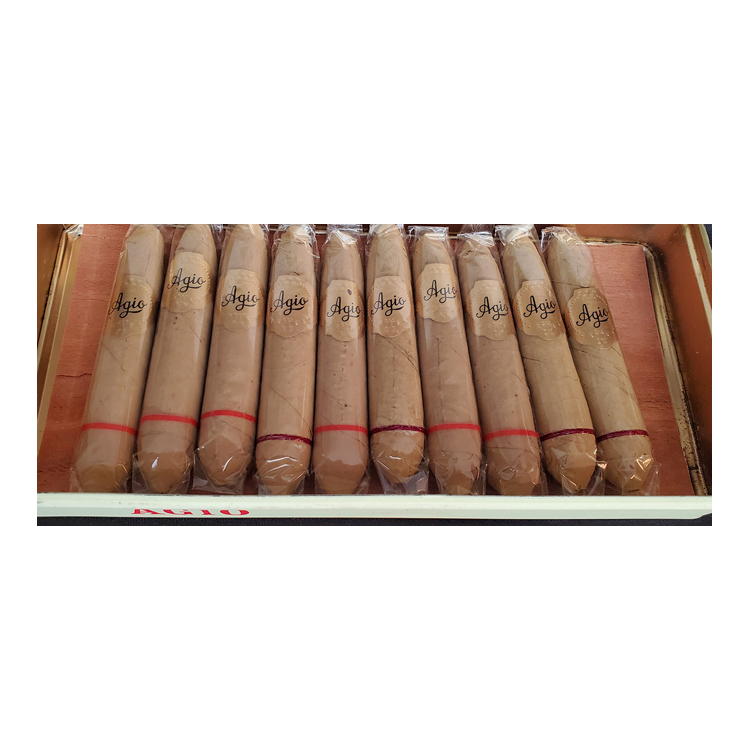
1954 AGIO GOLDEN HARVEST PETIT PERFECTO SINGLES

$30.00

Agio Gouden Oogst is a traditional cigar made in the Netherlands. It was brought to the market in 1954 to celebrate Agio’s 50 year existence. When WWII ended in 1945, and the limitations placed upon the brand were finally lifted.  In 1950, Wintermans formally changed their name to Agio.  Then, in 1954, in honor of their 50th anniversary, they launched this Golden Harvest cigar.

1960s BERING CZARS SINGLES

$45.00

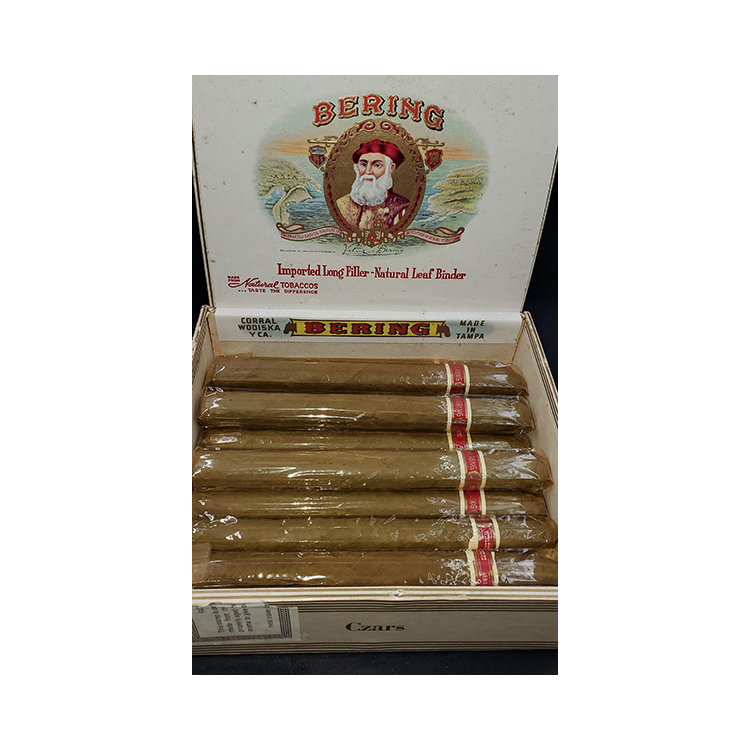
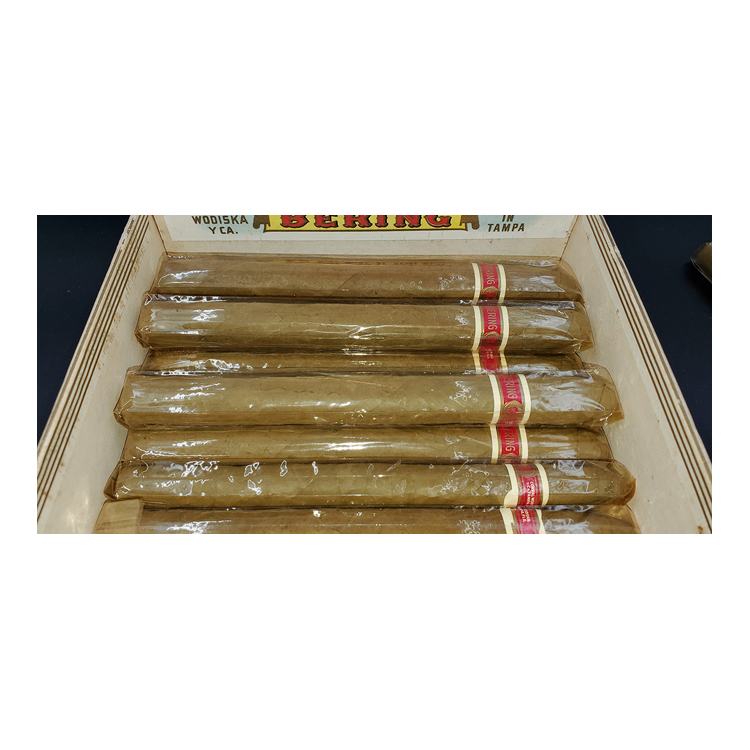
Corral-Wodiska & Cia. was a cigar manufacturer of fine cigars in Tampa from 1905 to 1985.Their first cigar brands were Bering and Julie Marlow, a beautiful and famous New York actress and friend of Wodiska. These cigars are circa 1964 are 100% tabacco, hand made of long filler and a candela wrapper. The name “Bering”, Corral-Wodiska's best known brand of cigars, can still be seen on the side of the Tampa building.  In 1985, Corral, Wodiska & Cia. was bought by Swisher International, Inc., makers of Swisher Sweets who consolidated its manufacturing processes and sent Bering cigar production to Honduras, where they are still manufactured to this day.

1965 SUERDIECK BAHIA BRASIL FLORINHA SINGLES

$20.00

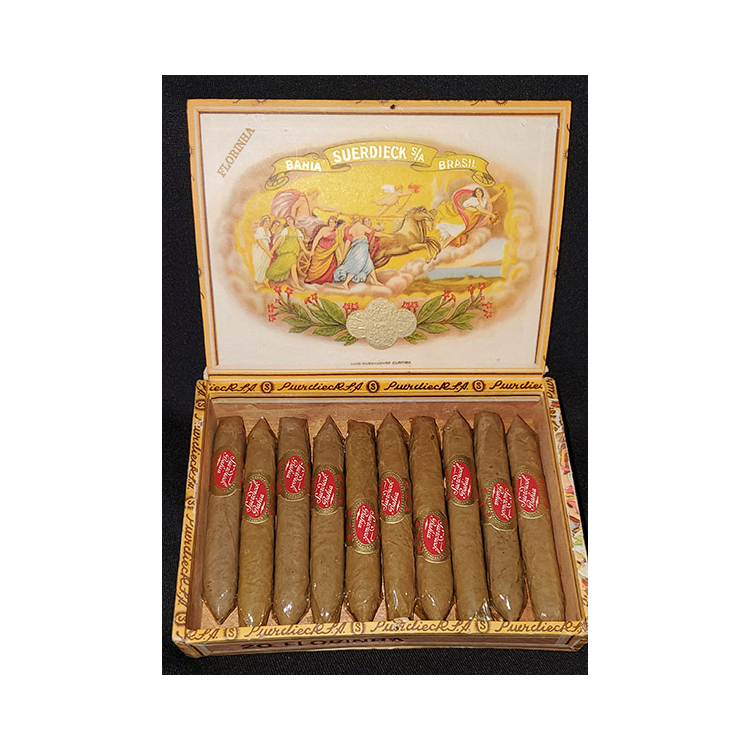
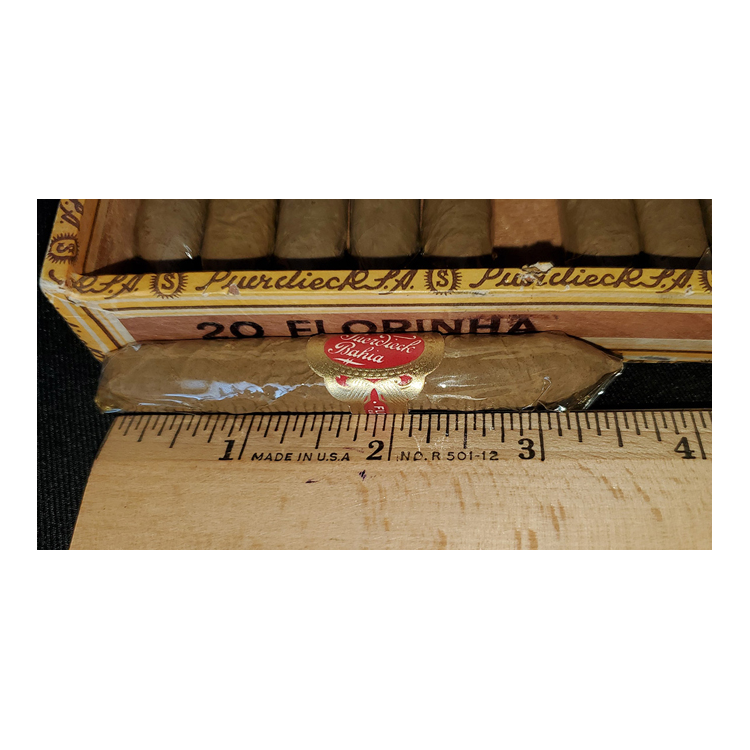
I obtain these cigars from a contact I have in Portugal. They are well maintained and fresh. I have included information and two reviews on this brand from a major website that no longer has them, see below:


From Cigar.com:

Performs like it was just rolled yesterday.

By far one of the top 10, best tasting "mature" cigars we've ever had the privilege of burning! Suerdieck Bahia c.1965 cigars still, to this day, remains rich and full-flavored due to their incredibly hearty Brazilian tobaccos. Rumor has it, like many German-market cigars from this era, that the blenders actually "snuck in" Cuban tobacco into the filler of this cigar in an attempt to get around the Embargo Act—again, just a rumor, but they taste delicious.

Suerdieck Bahia hails from the Suerdieck S.A. factory which stood in the Reconcavo Baino region of Brazil. The factory remained in operation from 1890 to 1999, when it closed. Rolled in 1965, the cigar sports a Brazilian Maduro wrapper concealing a long-filler blend of hearty Brazilian tobaccos and maybe, just maybe, a sliver of Cuban leaf, but that can't be confirmed. The blend burns smooth, and although you'd expect a subtle taste, you're still blasted with medium-bodied strength, so this beauty was probably incredibly powerful in 1965. The flavor profile is actually still filled with that semi-sweet, rich chocolate taste Brazilian tobaccos are known for. For a super mature cigar, Suerdieck Bahia performs like it was just rolled yesterday.

Reviews:

X – Greatest cigar I ever smoked. Worth every dollar, thank you

XX – Great cigar. Pretty cool listening to "The Girl From Ipanema" on my IPod thinking I am probably the only person in the world smoking a cigar with Brazilian Tobacco from the time the song was released here in 2017

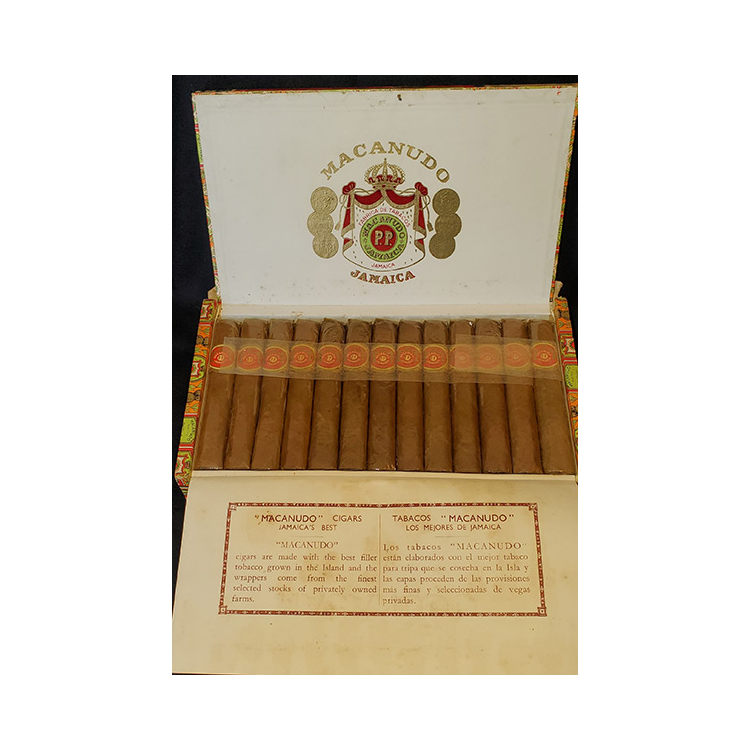
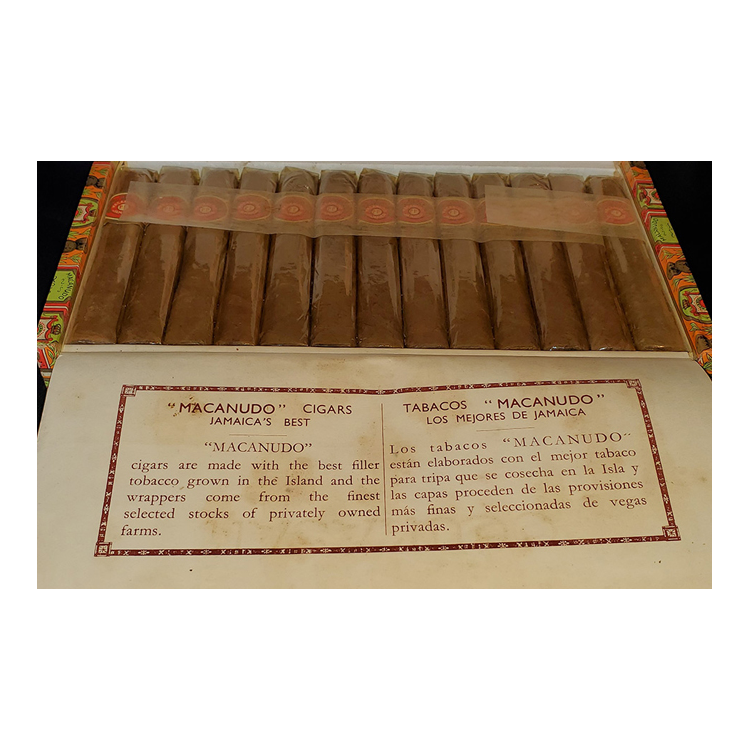
1968 MACANUDO JAMAICAN PETIT MACANUDOS SINGLES

$60.00

These hand made origjnal Macanudo Jamaicans were in a sealed box until I opened them on 9/20/23. This box design is identical to Punch cigar box which dates these being prior to the 1971 buyout of General Cigar.  These cigars may even be from the 1950s, notice the typewriter made label on the bottom of the box and the photo from a Country Life UK magazine advertisment in 1951. They are perfectly preserved and smell like cedar and spice. Very rare and won't last long!

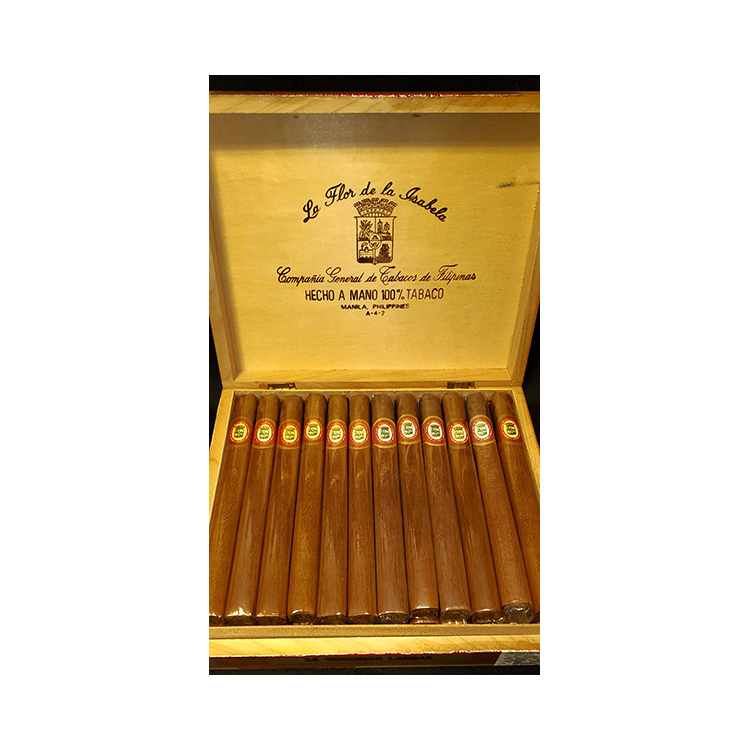
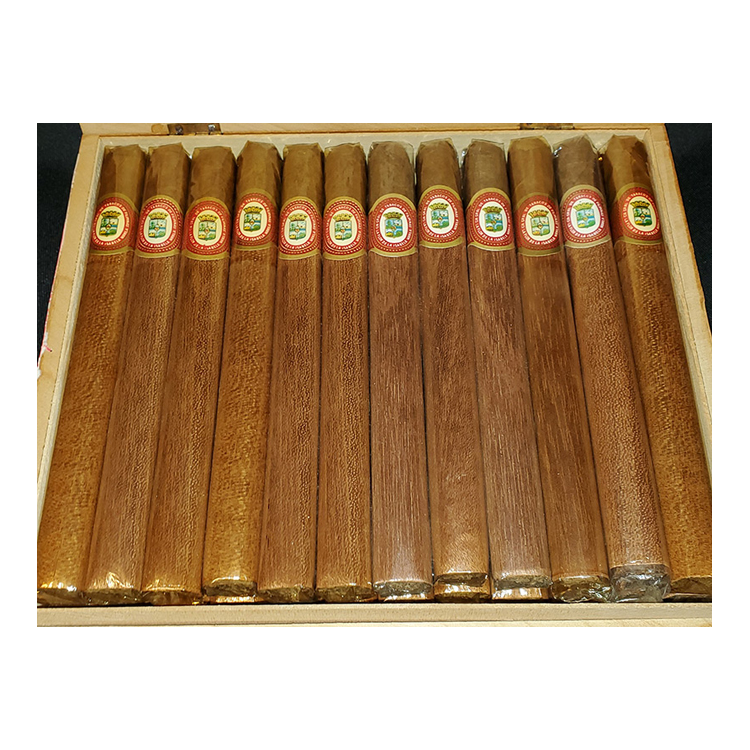
1970’s LA FLOR DE LA ISABELA CORONAS LARGAS SINGLES

$30.00

These cigars are cedar wrapped, hand made in the Philippines. The company established “La Flor de la Isabela” (the Flower of Isabela) in 1887, as the largest and most sophisticated tobacco and cigar factory in the world at the time. It was the first Philippine cigar factory capable of volume production for export. By the late 19th century, primarily through the export of La Flor de la Isabela, the Manila Cigar became every bit as celebrated throughout the world as the Havana Cigar.


 Finally, World War II destroyed many of the Tabacalera’s facilities. The company rebuilt after the war, but by the late 1980s, its operations were a faint echo of what it had once been a hundred years before.


After a century, CdF sold the entire Tabacalera tobacco business, including the name, to a Filipino group. This group rejuvenated the factory, adding modern equipment and storage facilities and a vacuum chamber, and rebranded the business “La Flor de la Isabela,” with new packaging for all lines. One thing didn’t change: the factory continued to make cigars the same way they made them in 1881, “totalmente hecho a mano” (totally handmade).


La Flor de la Isabela brought in a Cuban master cigar maker, Señor Alfredo Salinas, as a consultant. He stayed in Manila for several years, and even brought his mother along from Havana. Sr. Salinas improved every aspect of the operation, from working with the tobacco growers, to selecting the harvest, curing, aging, and blending. He taught the workers the Cuban rolling style, which ensures a consistent and effortless draw.


Today, the company has reverted back to its old name: Tabacalera Incorporada. Our tradition is more than a name. Each cigar we make is a work of art, and a product of impeccable quality. Our cigars undergo strict quality measures to ensure consistency in appearance, fermentation, draw, smell, and taste. Our goal remains to deliver the best smoking experience you will ever have.

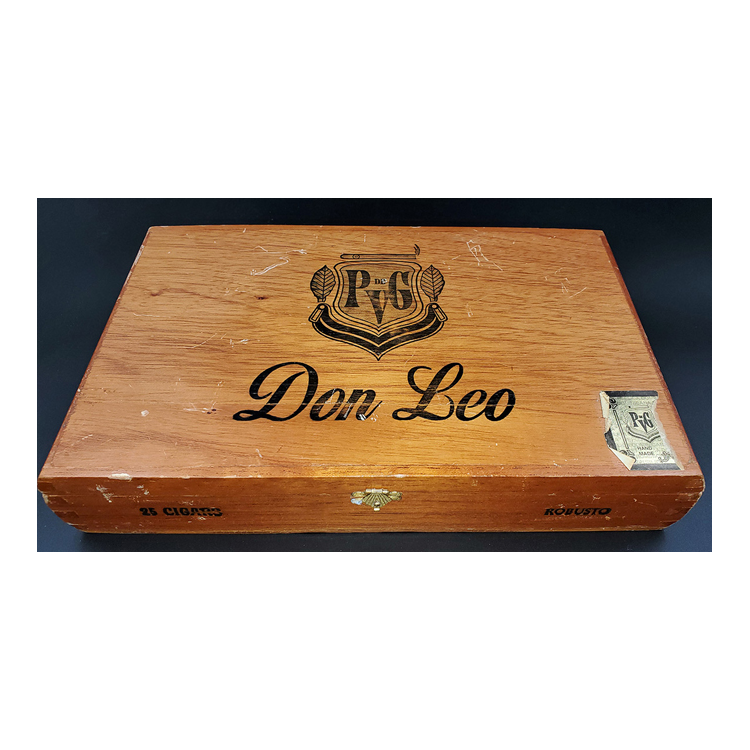
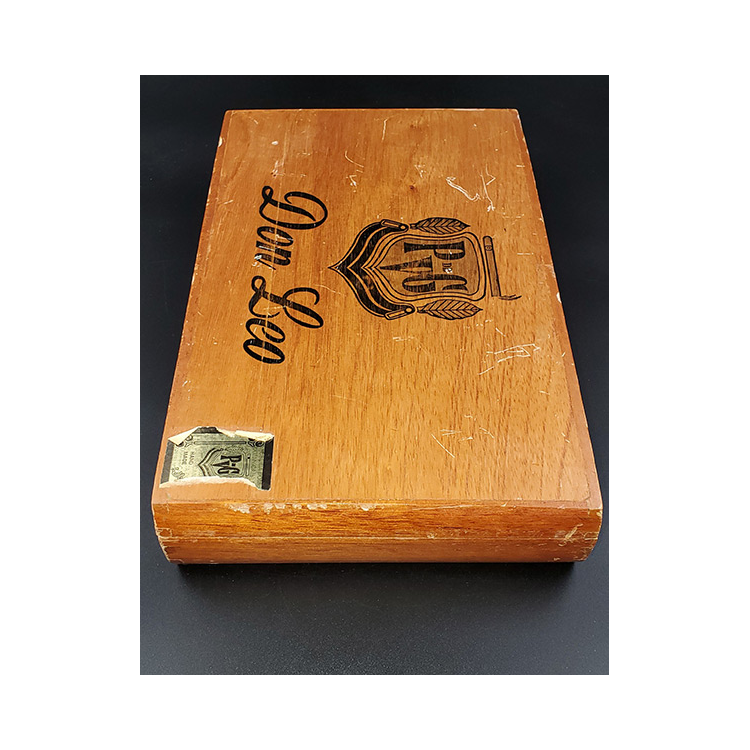
1990’s DON LEO ROBUSTO SINGLES

$25.00

Hand Made in the Dominican Republic. The release date was December 1, 1998 and Cigar Aficionado scored it as 86 points.

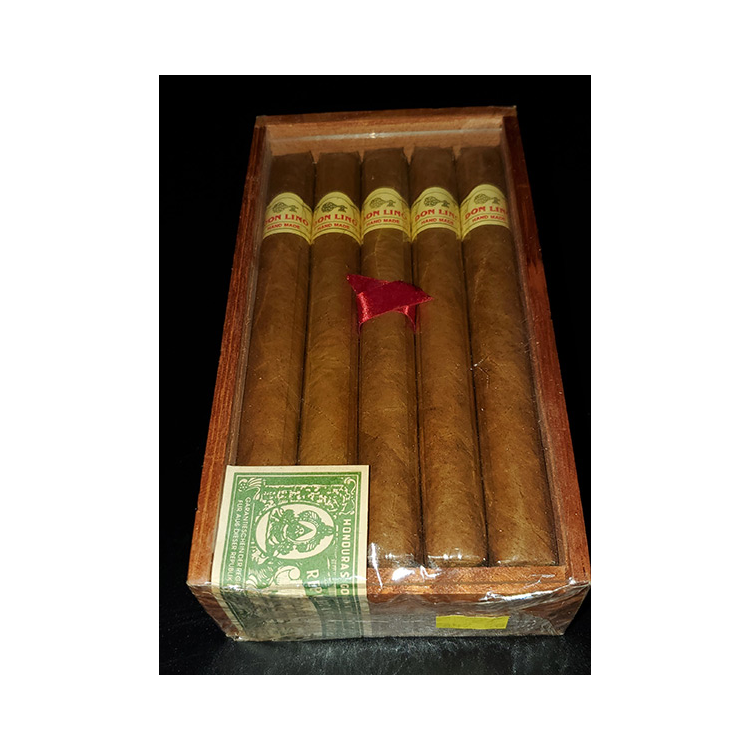
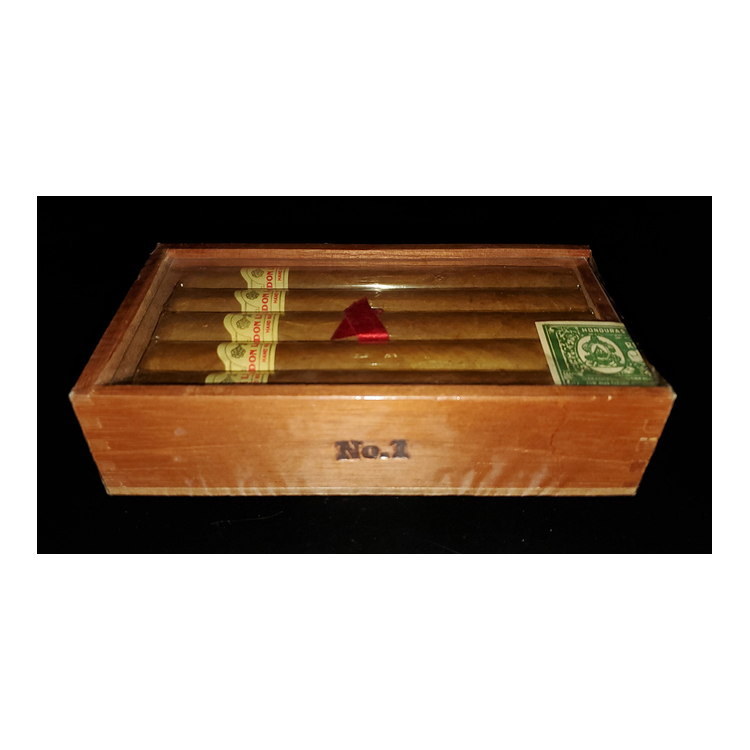
1990’s DON LINO NO. 1 BOX

Original price was: $200.00.Current price is: $175.00.

Don Lino was launched in 1989 by the Miami Cigar Company, to immediate success. Made in Honduras, this box of ten NO 1's are Hand Made Lonsdales and is still sealed with the original price sticker attached. Length: 6.5 and Ring: 44.

1990s GDM COHIBA TORPEDO DOMINICAN REPUBLIC SINGLES

$25.00

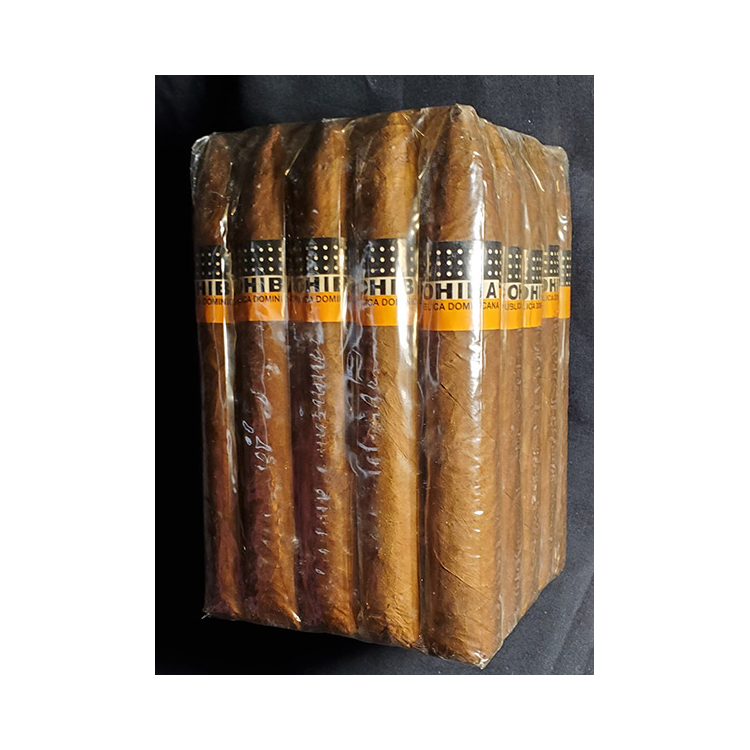
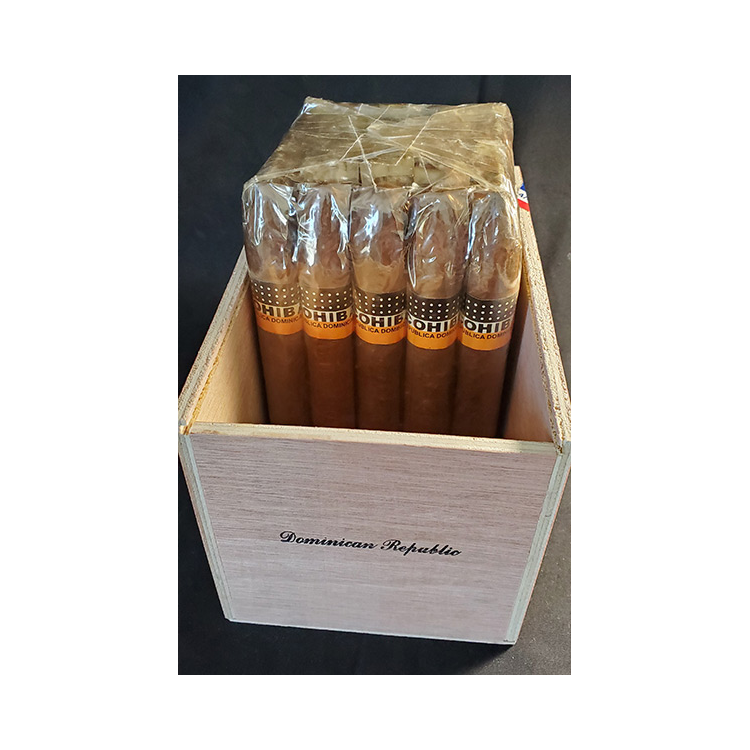
I know what you are thinking…fake cigar! In todays world I would probably agree with that initial observation however, there are details to consider before jumping to that conclusion. I will explain why I am willing to let my clientele decide instead of hoarding these truly wonderful cigars. These are labeled Dominican NOT Cuban. Please examine the photos for closeup inspection.


First, the story…I got these directly from the liquidator of a very high end Colorado estate who personally knew the owner. They supposedly were stored in a humidor since the early to mid 80’s (turns out it was the mid 90s), located in a wine cellar environment and were not part of the estate sale. In my experience with aged vintage cigars, the condition of the cigars and the yellowing of the cello would tend to support the storage statement. These cigars could have been bundled and sealed in boxes for up to 35 years. Aged cigars tend to take the shape of the surrounding cigars, similiar to box press but naturally occuring over time. In these bundles, most of the cigars have minor semi-flat edges depending on the position in the bundle. The cello yellowing is another indicator of aging, which can be caused by many factors like oils being released etc. Not all aged cigars share this characteristic as I have many older cigars with clear cello.  It is worth noting that the cello is not crispy or brittle, lending to the proper storage statement. Based on these facts I believe these cigars are capable of being from that time period.


But wait, there’s more information to consider.


If my above analysis is correct, then we have gone back to a time when counterfeiting Dominican cigars would have no purpose. Dominican cigars were not fetching large sums of money even with the Cohiba name. So where did these come from? Here is a little Wiki history exerpt about the Dominican Cohiba:


“The General Cigar Company, a private firm having no relation whatsoever to the Cuban cigar industry, first registered the name Cohiba in the United States in 1978 and subsequently began selling cigars under the Cohiba brand in that country (US) in the 1980s. Manufacture and sales of General Cigar’s brand was significantly expanded during the 1990s cigar boom, with General Cigar’s product known colloquially as “Red Dot Cohiba,” owing to the red dot in the middle of the “O” in “Cohiba” on its bands and boxes. This Cohiba is related to the Cuban product in name only, containing no Cuban tobacco, and thus is the only “Cohiba” that can be sold legally in the United States.”


The above statement confirms that General Cigar’s Dominican Cohibas were manufactured for US distribution in the 1980s. Marketed with a plain band and the name Cohiba, the public wasn’t buying it and sales dwindled. General Cigar decided in the late 1980s to regroup/rebrand and after a few years hiatus reapplied for a second Cohiba trademark in 1992. The result was the Cohiba “Red Dot” Dominican we see on the market today.


Fast forward to 1997, in a court case (General Cigar vs GDM) it is revealed that sometime in the late 1980s to early 90s a company named Monte Cristi began making Dominican cigars in the Dominican Republic and calling them Cohibas. During this time, as stated in the lawsuit, a company named Global Direct Marketing (GDM) sought to capitalize on what they say was an abandoned, public domain trademark since General cigar had ceased production of their Cohiba. GDM first attempted to import their Dominican Cohiba into the US with Monte Cristi but US Customs was seizing the cigars as counterfeit, possibly believing all Cohibas were either Cuban or that they where entangled in trademark law. Sometime around 1993 or 94, to eliminate the seisures, GDM began importing the Monte Cristi Dominicans without markings and GDM had them banded, labeled and packed in NY for sale in the US as a Dominican Cohiba. The labeling described in the lawsuit that was applied in NY to the GDM Cohibas matches exactly to these cigars I have on my website. Despite allegations made by General cigar as to inferiority, the construction and cap is flawless, except for natural boxpress aging. The bands are professionally printed and perfectly fitted on each cigar. The bands are Cohiba color matched, thick, glossy paper stock and not cheaply made which rival any unembossed band on the market at that time. The flavor is of vintage quality and the burn is true.


Considering all the above, I originally believed these were from the General Cigar 1980s distribution but in light of the ongoing research, the 1997 lawsuit and the emergence of a recent trademark case in Dec 2022, I now believe these cigars were part of the GDM Cohiba distribution of the early 1990s. These cigars are real vintage, aged Dominican cigars that have their place in history as part of an ongoing 45 year old legal battle regarding the name Cohiba and who has the legal right to US distribution. Over the last year I have discussed this with General Cigar representatives and gotten comments like ” I have only heard of these but never actually seen one” and “…”sure you could fake them but why would you”. Indeed, why would you? These cigars are nothing less than part of being a legal football regarding the Cohiba nomenclature, with a hint of American greed and capitalism. They were distributed nationally by GDM, not made by a backroom counterfeiter for street corner sale. I am not charging nor did I pay Behike prices. I am merely presenting these for what they are; a vintage Dominican, a part of a historic legal battle and a fine aged cigar. These are under priced for something you won’t find anywhere else and I hope you will not let scepticism deprive you of an enjoyable smoke. Enjoy!


For a cigar review including more background into the history of this cigar with the surrounding legal battles research; click the links below and watch the BACKYARD CIGARS videos:


Video link: Will the real Cohiba please stand up?

Video link: Will the real Cohiba please stand up? Part 2

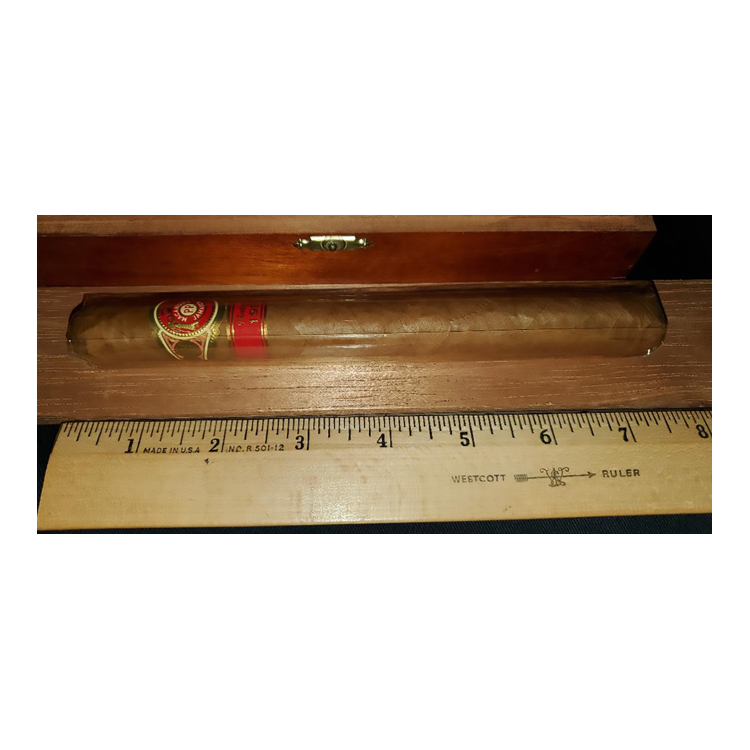
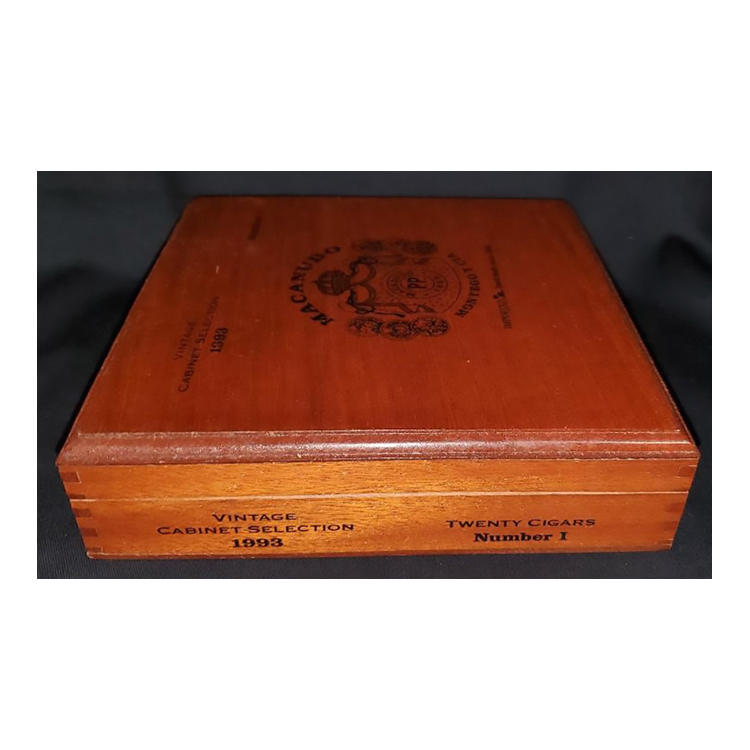
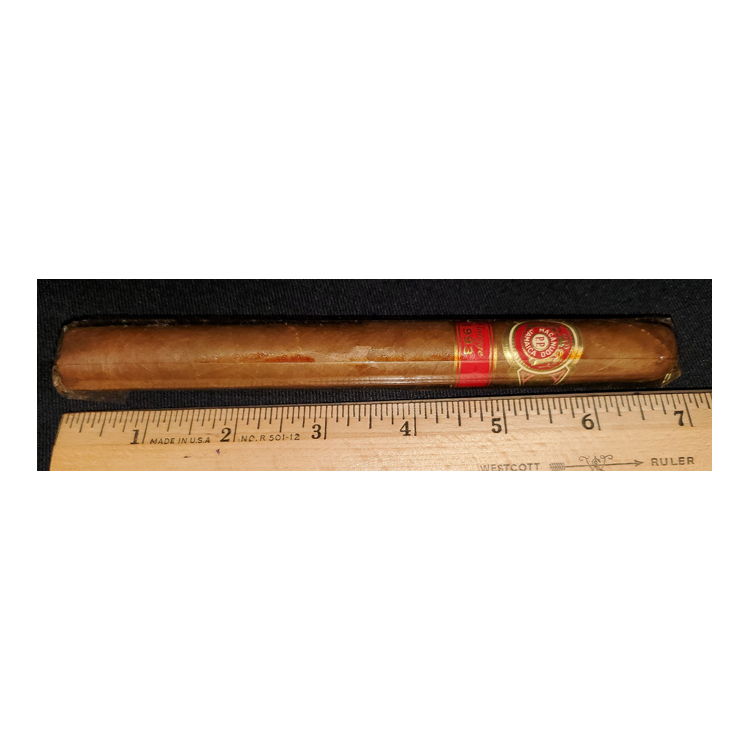
1993 MACANUDO VINTAGE CABINET SELECTION NUMBER 1 SINGLES

$50.00

Hand Made in Jamaica in a CHURCHILL vitola. Properly aged and rare find in original release. The meaning of "macanudo" in Spanish is "best of the best," or "first-rate." This definition is appropriate for the General Cigar line of the same name. The Macanudo Vintage Cabinet Selection line goes quite a bit beyond the brands normally high standards. The cigar makers at Macanudo look for the very best tobacco for the Vintage Cabinet line. In the world of Macanudo cigars, a vintage year comes along only when a harvest yields small quantities of filler, binder and wrapper leaves whose qualities are superior. Those quantities, which total less than one in one thousand leaves, are then set aside for a given year's Macanudo Vintage Cabinet Selection. The cigar makers' standards are so high that the Macanudo Vintage Cabinet line has only been produced four times; 1979, 1984, 1988 and 1993. General produced approximately 50,000 cigars of the 1979 vintage; 125,000 cigars of the 1984 vintage; 400,000 cigars of the 1988 vintage; slightly over 1 million cigars of 1993 vintage. The filler is from the Dominican Republic and Mexico. The binder is San Andreas Valley, Mexico tobacco chosen for tensile strength, flavor, and long, slow, even burning characteristics. The wrapper is a Connecticut Shade, grown from Havana-seed in the sandy, fertile soil of the Connecticut River Valley; the wrapper is from the 1993 tobacco crop. Cifuentes y Cia, Ltd. in Jamaica manufactures the Macanudo Vintage Cabinet Selection. The Macanudo Cabinet Vintage Series comes very highly rated.


Wrapper : CT Shade
Binder : Mexican San Andreas
Filler : Dominican/Mexican

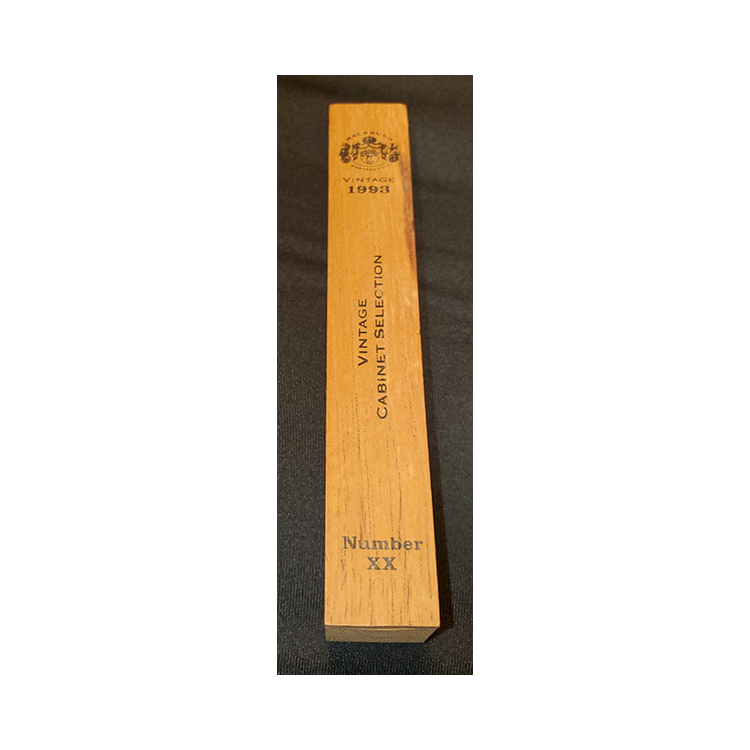
1993 MACANUDO VINTAGE CABINET SELECTION NUMBER XX COFFIN SINGLES

$70.00

Hand Made in Jamaica in a CHURCHILL vitola. Properly aged and rare find in original release. The meaning of "macanudo" in Spanish is "best of the best," or "first-rate." This definition is appropriate for the General Cigar line of the same name. The Macanudo Vintage Cabinet Selection line goes quite a bit beyond the brands normally high standards. The cigar makers at Macanudo look for the very best tobacco for the Vintage Cabinet line. In the world of Macanudo cigars, a vintage year comes along only when a harvest yields small quantities of filler, binder and wrapper leaves whose qualities are superior. Those quantities, which total less than one in one thousand leaves, are then set aside for a given year's Macanudo Vintage Cabinet Selection. The cigar makers' standards are so high that the Macanudo Vintage Cabinet line has only been produced four times; 1979, 1984, 1988 and 1993. General produced approximately 50,000 cigars of the 1979 vintage; 125,000 cigars of the 1984 vintage; 400,000 cigars of the 1988 vintage; slightly over 1 million cigars of 1993 vintage. The filler is from the Dominican Republic and Mexico. The binder is San Andreas Valley, Mexico tobacco chosen for tensile strength, flavor, and long, slow, even burning characteristics. The wrapper is a Connecticut Shade, grown from Havana-seed in the sandy, fertile soil of the Connecticut River Valley; the wrapper is from the 1993 tobacco crop. Cifuentes y Cia, Ltd. in Jamaica manufactures the Macanudo Vintage Cabinet Selection. The Macanudo Cabinet Vintage Series comes very highly rated.


Wrapper : CT Shade
Binder : Mexican San Andreas
Filler : Dominican/Mexican

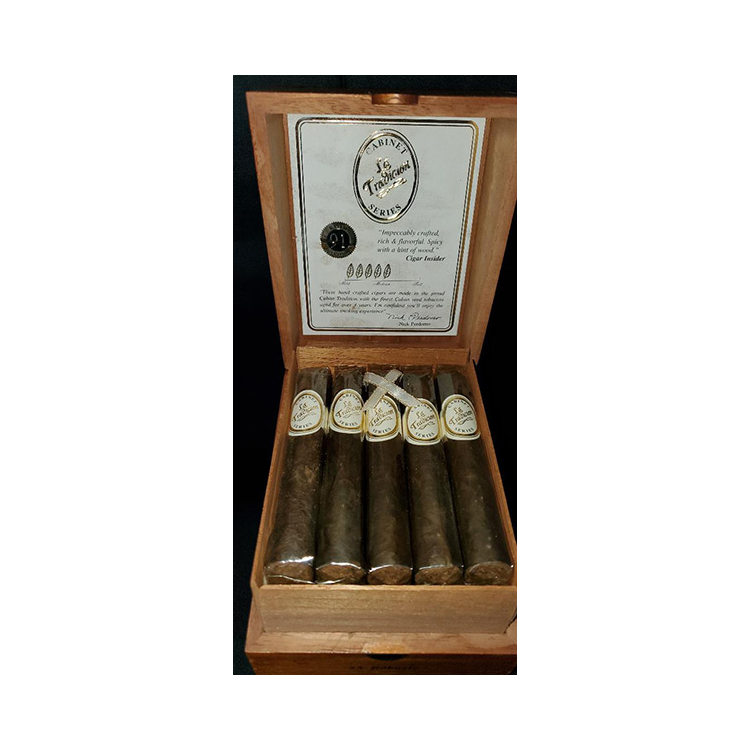
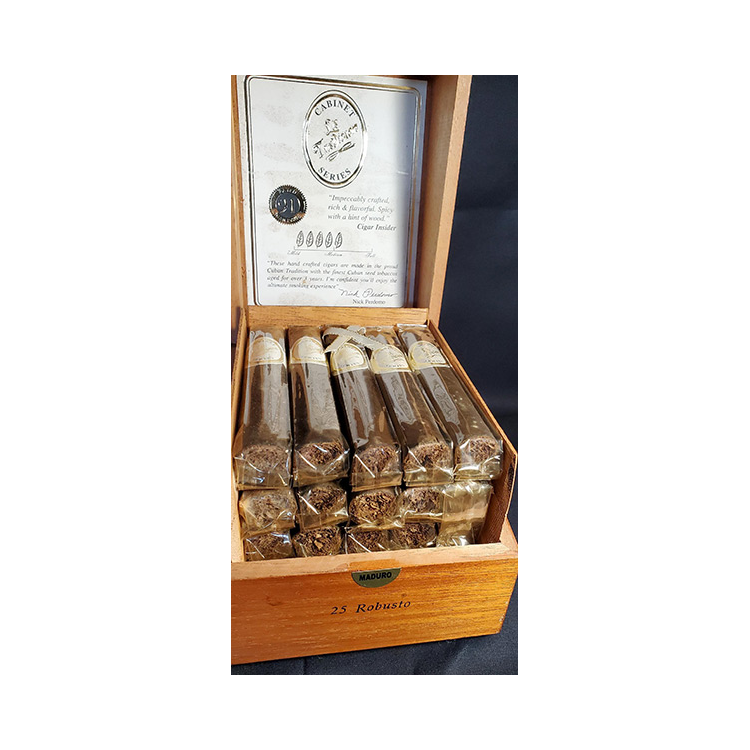
2000 PERDOMO LA TRADICION CABINET SERIES MADURO ROBUSTO SINGLES

$45.00

These were purchased as part of a collection. They pre-date Perdomo Reserve LTD which started in 2003. These could date back as early as 1998 according to research. Rated 91 by Cigar Insider (see photos) before being aged over 20 years. Not many of these around!